
Privileged Access Security for Telecom
Adaptive secures privileged access to telecom network infrastructure, OSS/BSS systems and subscriber data, protecting critical services from insider and supply-chain threats.
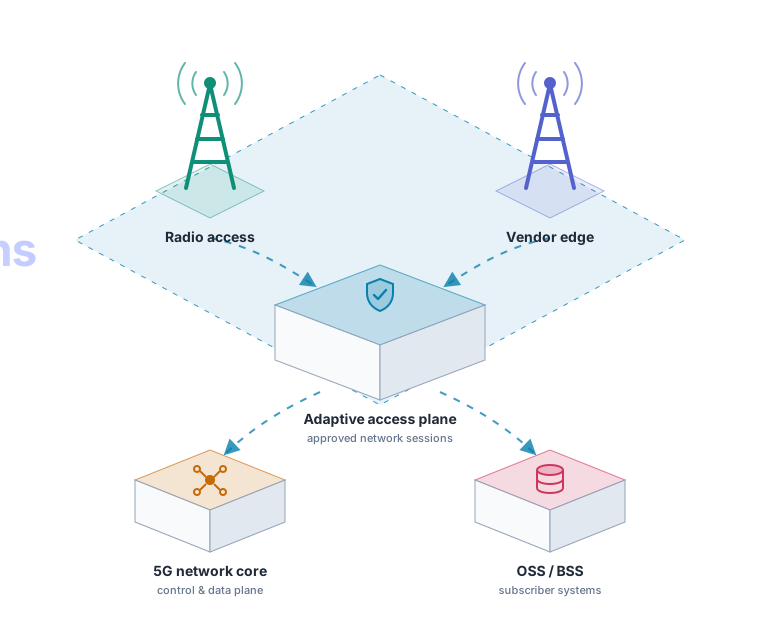
Telecom operators run critical national infrastructure and hold vast amounts of subscriber data. That makes network elements, core systems and customer records prime targets for nation-state attackers and insiders.
Telecom environments combine legacy network equipment, cloud-native 5G cores, OSS/BSS platforms and large vendor and managed-service ecosystems. Privileged access is often spread across shared accounts, jump hosts and vendor VPNs, making it hard to know who can reach which system. Regulators expect strict protection of subscriber data and fast incident reporting, which requires complete visibility into privileged activity.
Zero standing privilege for telecom infrastructure
Adaptive replaces shared accounts and vendor VPNs with identity-bound, just-in-time access to servers, databases and clusters. Access to subscriber data can be masked and restricted by policy, and every session is recorded for forensics and regulatory reporting. Vendors and managed-service partners get scoped, time-limited access without being placed on the network.
How Adaptive helps
Replace Vendor VPNs
Give equipment vendors and managed-service partners brokered access to specific resources only, without network-level access to your infrastructure.
Protect Subscriber Data
Mask CPNI and subscriber PII in flight and enforce least-privilege access to billing, CRM and customer databases.
Forensic-Grade Session Records
Record every privileged session and query so security teams can investigate incidents quickly and meet regulatory reporting timelines.
 |
| SOC2 Type II
